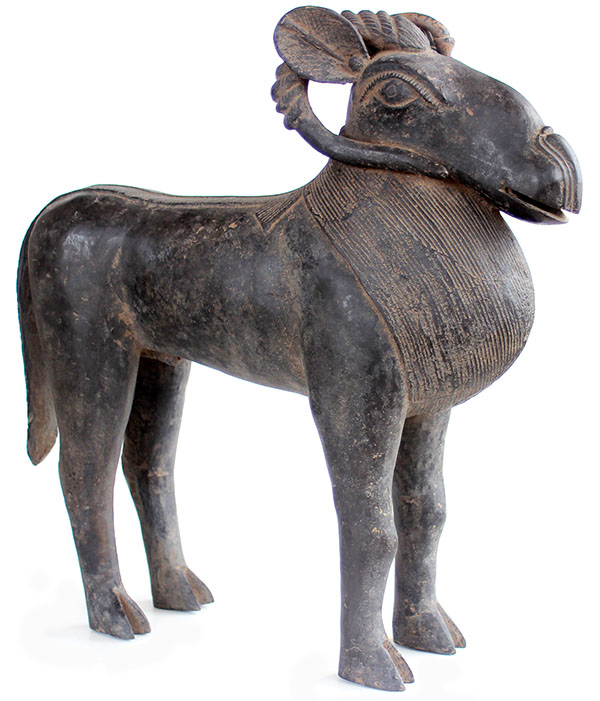
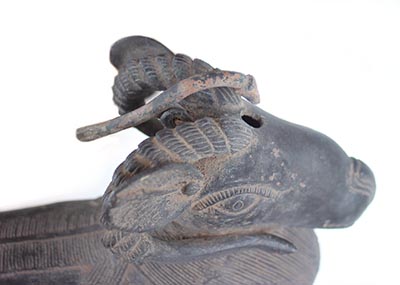
A very similar ram, which is also an aquamanile – a vessel for water – is housed in the British Museum in London; according to the museum, it was used for ceremonial ablutions. The museum also states that this object was likely created as a symbol of royal power for a king’s altar.
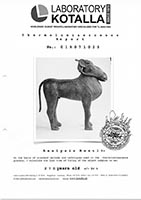
In Benin, the ram symbolises masculinity as well as perseverance, and was traditionally sacrificed during the Ague ceremony. Oba Esigie (-1550) developed this ceremony into a major festival. The naturalistic depiction, devoid of excessive symbolism, suggests that the ram is of great age, as determined by TL analysis.
Cp.:
W./ B. FORMAN, Philip DARK: Die Kunst von Benin, Prag 1960, S. 58/ 59.
Barbara PLANKENSTEINER (Hg.): Benin. Könige und Rituale. Höfische Kunst aus Nigeria, Wien 2007, S. 433. |